Reading the Idaho State Seal.
Art Study and First Impressions
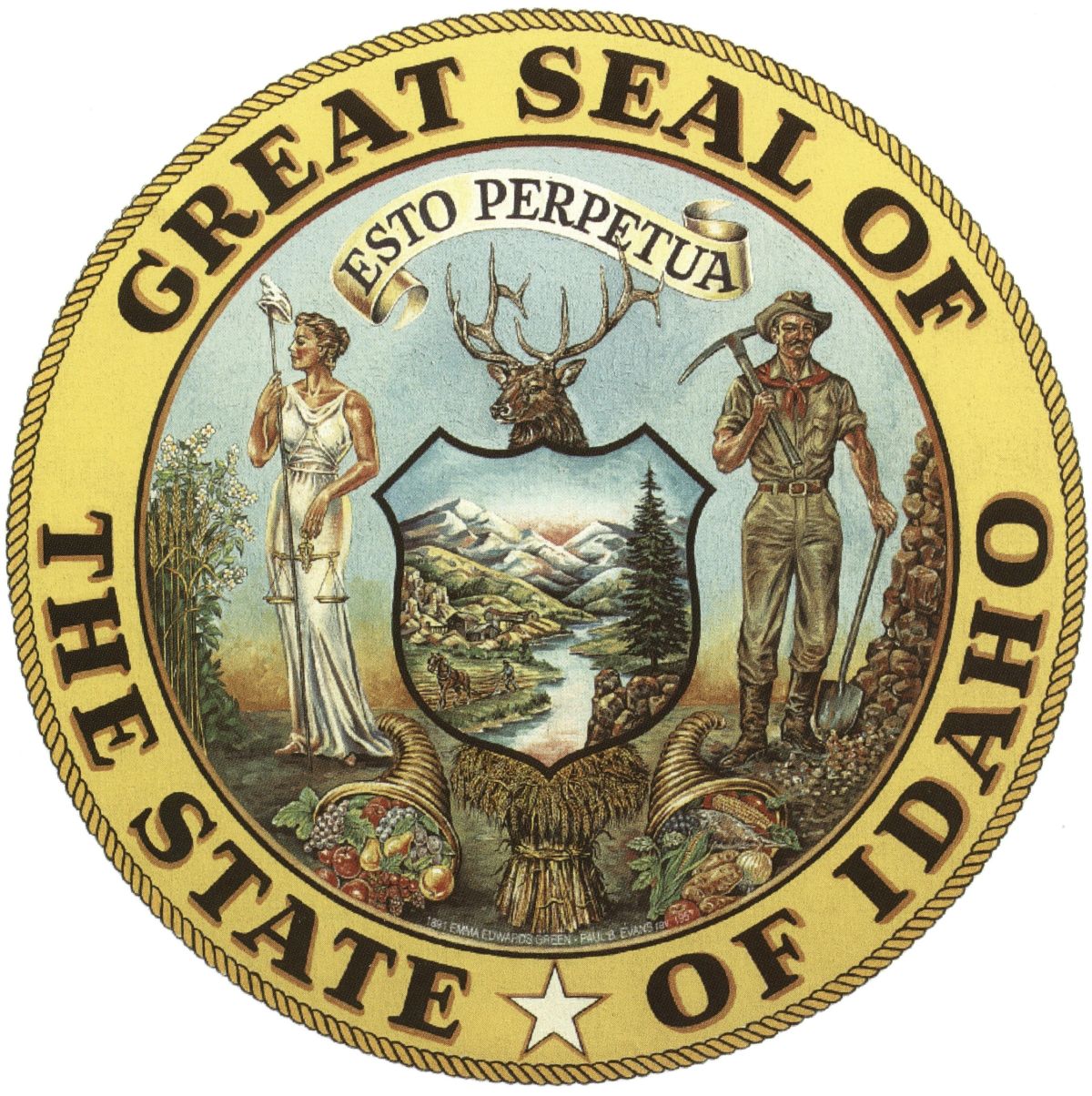
Art study shows the Idaho state seal as a round and even image with balanced forms and calm lines that guide the eye. This order gives the sense of a steady place, but Idaho did not form in a steady way. The seal offers a clean view, yet the real history held conflict and sharp power. The use of bright color in the painted image strengthens this effect. It turns the seal into a polished scene shaped by white taste, where light, tone, and smooth surfaces mask the strain behind the state’s rise.
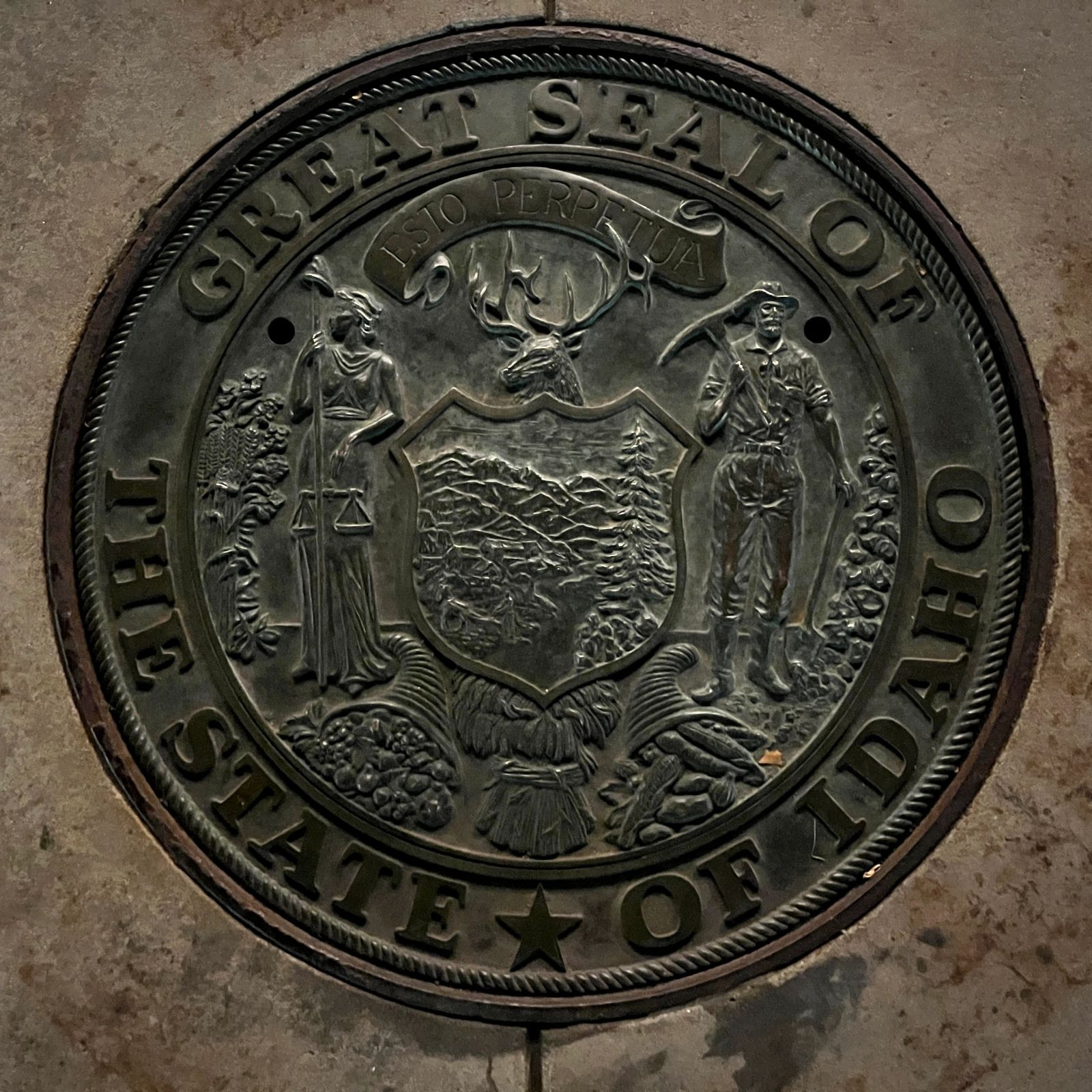
The seal also exists in bronze, set into stone near the Capitol. Bronze carries weight far beyond its metal form. It is copper and tin drawn from the ground and fired into a hard alloy. It holds heat, age, and shine. Western civic art has long used bronze to fix stories in public view. Its slow patina and heavy feel give the sense of permanence. It signals value, memory, and state power. In this context, bronze works as both monument and memorial. It marks what the state wants to honor and what it wants the public to remember, yet it also controls how that memory takes shape. The smooth cast surface and round frame create a calm civic tone. They turn a complex past into fixed public truth.
Bronze stands as a Western standard for civic presence. It announces that a place or idea carries weight and should endure. On the seal, this choice lifts settler views of land and labor into an elevated form. It frames the state’s origin story in metal and stone. It presents a lasting claim to rightful rule.
The Woman and the Miner: A Paired Creed
On one side stands a woman with a balance and a pole with a soft cap at the tip. She acts as law cast as virtue. Her pose is still, with no hint of strain. Her pale skin and draped robe follow the late eighteenth century neoclassical style used in early American civic art. In color, her skin looks bright white, far lighter than the ground around her. She becomes the model of settler femininity, calm, slim, and pure. She stands as moral guide and as emblem of beauty shaped through a white gaze. Her role also supports a heteronormative frame. She is placed beside the miner not as partner but as complement, the figure of grace in a world built on male labor.
On the other side stands a miner with tools in hand. His gear points to work pulled from the ground. His face and clothes mark him as the frontier hero, the figure settlers praised for making the land yield. In color he is even more idealized. His shirt is bright. His arms are clean. His boots shine. He carries no dust or sweat. His body reads as strength without cost. He stands as an emblem of Western masculinity and productive force. The two figures form a social plan. One stands for law, the other for gain. One grants moral cover, the other brings yield. This pairing frames the state through a white and heteronormative lens, with land cast as stage for their rule.
The Shield: Land as Image and Claim
At the center sits a shield with hills, trees, open sky, and a wide river. In color this becomes soft pastoral art shaped by Western ideals of ease and balance. The hills glow. The water holds clean light. A man and horse work a small field in the mid-ground. They mark the land as site of labor and use. Their clean outlines hide the strain of real work. They stand in for agronomy as extraction, where soil and animal power are drawn into steady yield.
Even with this lone figure, the scene still reads as calm and untouched. It turns the land into scenery and presents nature as pure gift. It hides the long presence of Native nations and the work they did for ages to tend and live with this ground. By showing only a white man and a horse, the seal casts land as new field ready for settler gain and sets domesticated labor as the rightful way to shape the valley.
The shield works like a small map. It boxes the land in a firm border and uses sight as proof of claim. It signals, in quiet form, that the state sees, measures, and rules this ground.
Symbols of Yield
The elk head above the shield stands as a fixed trophy, proud and still. In color, the antlers shine as if lit by lodge light. It signals mastery over wild life and casts the hunt as a rite for white men who claimed land through skill, sport, and right. It is one more form of extraction. In this view, even conservation meant gathering resources for gain, not care for land or view. A stripped field or cut bank could be praised for profit, even as the ecosystem broke under the loss.
At the base sit grain, a horn of plenty, and mining gear. In color they resemble early farm ads built to sell a vision of endless yield. Grain stands for farm labor. The horn spills fruit and promise. The pick and shovel point to wealth pulled from stone. None of these images show hands or bodies. They show only the clean end of hard work. They turn toil into emblem and hide all who bent their backs to make this yield real.
The Motto: Perpetual Claim
The motto “Esto Perpetua” curves around the seal like a ring. It says “Let it be forever.” This short line sets the claim of the state as eternal. It blesses a view of land where settlers rule without end. It makes that rule feel natural and fixed.
The Silences
The seal’s calm view hides as much as it shows. It leaves out land taken from Native nations. It omits Chinese, Basque, Latin, and Black laborers who built mines, farms, canals, and rail lines. It omits women who cooked, washed, raised children, and kept camps and towns alive. It omits the force, law, and loss that shaped Idaho in its early years. It also hides the violence used to secure this ground, from guns to armed patrols that cleared riverbanks, work camps, and trails for white settlement. In 1890, federal forces and state militias across the West, including Idaho, used armed pressure on the Shoshone and Bannock to force removal to the Fort Hall Reservation, a clear case of a larger military power pushing a smaller nation off land to open it for extraction.
This silence is part of its craft. It builds a world where extraction looks clean and order feels calm. It turns power into image and image into truth.
Cultural Lineage
The ideas on the seal reach back to the 17th century, when English planters tied land, law, and forced labor into one system of wealth. They used surveys and clean maps to mark claim. This view moved west and shaped the early West. River valleys were pulled into ditches. Timber ground fed mills. Sheep and cattle routes stretched across basins. Chinese crews cut canals and rail lines. Basque and Latin workers kept herds and camps running.
By the 19th century, settlers believed land gained worth when cleared, drained, or gridded. Survey lines marked ownership. Water law fixed rights to rivers. These systems helped push Native nations from ground they had shaped for ages. The shield mirrors this view with its clean hills and silent river.
In the early 20th century, dams, power plants, rail yards, and new wells turned heat, water, and ore into civic growth. Cars and paved roads widened the reach of extraction. The City Beautiful movement cast this landscape in a white Western ideal drawn from neoclassical art and the pastoral dream of Arcadia. Post offices linked the region through steady flow of deeds, claims, and orders. The seal sat at the center as a calm face of this larger plan.
The Seal as Civic Face
Placed in stone near the Capitol, the seal works as a civic front door shaped by a white gaze. People pass by and see balance, clean hills, and neat tools laid out with care. They see calm color and even form drawn from a Western view of order. The seal invites trust in the state as moral guide and rightful heir of the land. It is less picture and more instruction. It teaches the public how to see Idaho through that same gaze. It sets a way to read land and labor that favors the settler view and hides the long life of the ground before state rule.
The Seal as Map of Desire
At its core, the seal shows a clear aim: control without shame. It turns conquest into calm scene and wealth into neat signs of grain, fruit, and ore. It turns labor into symbol with no trace of strain. The seal was designed by Emma Edwards Green and adopted by the state in 1891 after a public contest. It worked as an early brand for the new state, one of many Western emblems built to show strength, promise, and rightful claim.
This aim shaped early policy and still shapes choices on land, water, heat, and growth. You can see it in dams, canal grids, power sites, irrigated lawns, and geothermal systems that warm civic halls. The seal set the tone. The city grew into it.
Revision: 23-Nov-2025 Sunday | 11:45 AM