About NRHP Signs on Buildings.
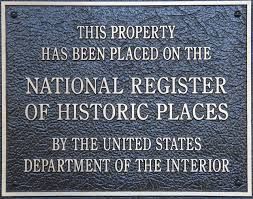
What Those Historic Plaques Mean
When you walk through an older neighborhood, you might notice a small plaque on one building and nothing on the one next door. The difference can feel arbitrary. It usually is not.
For a curious traveler who loves old buildings but does not speak preservation jargon, the plaque is best read as an invitation rather than a warning. It asks you to slow down. To notice materials and craft. To ask who worked here, who lived here, who passed through. At its most basic level, the sign says this place carries public value beyond private ownership. Its story is large enough to matter to a community, sometimes to a nation.
A plaque typically signals recognition through the National Register of Historic Places, a federal program administered by the National Park Service. The Register functions as a planning and documentation tool. It identifies places that matter in American history, architecture, engineering, or culture. It does not rank buildings by beauty or importance, and it does not turn streets into museums. It marks places where research has been done and evidence met national criteria.
Why One Building Has a Plaque and the One Next Door Does Not
Most older buildings are never evaluated for the National Register. Listing is not automatic. Someone has to initiate the work.
That work involves historical research, comparison with similar properties, and an assessment of whether enough original fabric survives to carry meaning. A building may qualify but never be nominated. Another may have been altered enough to lose the features that communicate its history. A third may only make sense as part of a larger historic district rather than as an individual listing.
Absence of a plaque does not mean absence of history. Presence of a plaque does not mean the story is complete. It simply means documentation happened within a specific framework.
What Listing Means in Practice
Listing on the National Register does not freeze a building in time.
Owners can repair, remodel, and adapt listed properties. Routine maintenance does not require approval. Private owners using private funds generally retain control over changes, even ones preservationists may question. The Register is not a design review board. It is a recognition system.
National Register listing alone does not prevent demolition. Review requirements apply only when federal or state funding, permits, or licenses are involved. In those cases, agencies must consider effects on historic resources and explore alternatives. Some cities adopt local landmark laws or historic districts with stronger protections, but those are local decisions and vary by place.
What listing does provide is recognition paired with practical tools, guided by an ethic that favors repair over replacement and stewardship over spectacle.
The Rulebook Behind the Plaque
Most National Register decisions rely on a compact manual titled How to Apply the National Register Criteria for Evaluation, commonly called Bulletin 15. It reads less like a manifesto and more like a field guide, with clear categories, tests, and examples that teach people how to look carefully and consistently.
It asks a small set of core questions. What kind of place is this. Why does it matter. What physical features carry that meaning. How intact are those features. How does the place fit into a broader historical pattern.
Taste plays little role. Evidence carries weight.
How Professionals Read a Place
A preservationist walks a block much like an architectural historian or a craftsperson, scanning for patterns and details that connect design to labor and use.
They look at massing and overall form, especially where changes have occurred. They notice fenestration patterns, window materials, and proportions. They read roofing profiles, porch configurations, cladding, and site placement. Brick bonds and mortar joints, tool marks in timber, garden layout, circulation paths, and the patina of daily use all matter.
These details anchor abstraction to material reality. A house becomes a record of hands and time rather than a style label. Bulletin 15 supplies shared language so people across cities and states can judge places consistently.
What the Plaque Cannot Hold
The National Register works place by place. Culture rarely does.
Many histories unfold across kitchens, rented rooms, fields, routes, and backyards rather than within single buildings. Some communities were mobile. Others were displaced before they could be documented. Everyday labor, care work, and informal economies shaped neighborhoods profoundly while leaving limited physical trace.
Large systems such as irrigation networks, rail corridors, streetcar lines, zoning decisions, and redlining patterns often define cities more than any one address. These cultural landscapes can be difficult to capture through individual listings, even when their impact is everywhere.
Because of this, the absence of a sign should never be read as absence of meaning. A plaque marks where research landed, not where history ends.
How to Read a Mixed Street
When walking a block with buildings from different eras, look for patterns rather than plaques.
Notice setbacks, porch rhythms, window proportions, materials, and landscape features. Pay attention to where buildings cluster by age or use. Ask what kinds of work happened there and who that work served.
Historic recognition usually follows those patterns. It rarely invents them.
A Practical Closing
If you see a plaque, treat it as information, not instruction.
It tells you someone took time to document why a place matters. It does not tell you what must happen next. That work belongs to owners, neighbors, planners, and communities.
Preservation is not about stopping time. It is about making informed choices while time keeps moving.
Glossary. Five Useful Terms
Historic Context
The larger story or pattern in which a place gains meaning. A farm within irrigation history. A depot within railroad expansion. Context frames significance.
Integrity
Degree to which original character remains visible. Assessed through location, design, setting, materials, workmanship, feeling, and association. Integrity lets a place communicate its past clearly.
Significance
Reason a property matters. Tied to an event, a person, design or construction merit, or research value. Significance answers the “why.”
Property Type
Category used for evaluation. Building, structure, site, object, or district. This classification guides comparison with similar resources.
Criteria for Evaluation
Four formal tests used nationwide. Event, person, design or construction, information potential. Meeting one or more, plus integrity, supports listing.
Keep these five in your pocket. They turn a casual stroll into a readable archive.
06-Feb-2026 Friday
02-Feb-2026 Monday